
I’m not. You’re here.

When friends learn about my diagnosis, one of the most common first things said in reply is “I’m here for you.” I’ve said the same thing myself when in the same situation even as, often, I’m not quite sure how to be there exactly. The words seem trite. Now that I have been on the receiving end, there’s one thing I’ve learned: don’t worry about the words; the best responses are the simplest ones: “I am thinking about you”, “I know you’re strong “, and, curiously enough “let me know how I can help.” You would think for someone who’s fiercely guarded her independence, for someone who has been the responsible one, the provider, and the strong one in her family, I’d be less accepting of help. But maybe it isn’t “help” so much as solidarity. Less like comfort, more like company. Maybe there is no difference. Now, since I am a project manager after all, I am more than happy to delegate. If the roles were reversed, I’d like specifics too, so I try to provide that, but this whole situation is inherently fraught with uncertainty, so there is some fluidity to the “tasks”. It has to be in a form I can somewhat organize without micromanaging. 🙂

I know the feeling of powerlessness, of not knowing how to help a friend going through a challenging time. I also know that the next few months are exactly that challenging a time for me so… this has converged here. In speaking to the social worker at UCSF, she suggested an app/website for such a convergence: https://lotsahelpinghands.com/. In it, I started a “Community” succinctly named “December”.
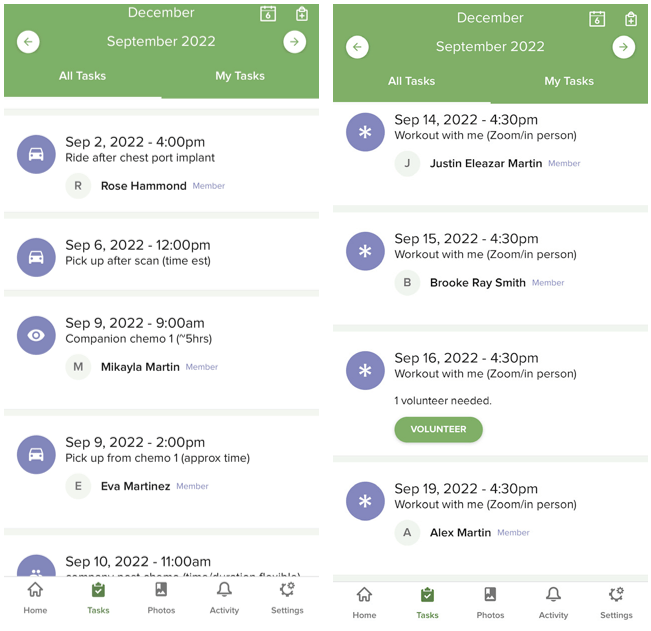
Here, I have and will continue to add requests for company to procedures, ride to/from chemo, and more importantly, a workout buddy. Mind, I am not sure how often I will want to actually work out, but I know I need to move a bit everyday, so why not connect with a friend in person or via Zoom/Skype and chat, meditate, stretch, or maybe actually work out.
But even if you never sign up to this app, your thoughts whether coming to me via email, IG comment or message, or carrier pigeon, know that I appreciate them all.
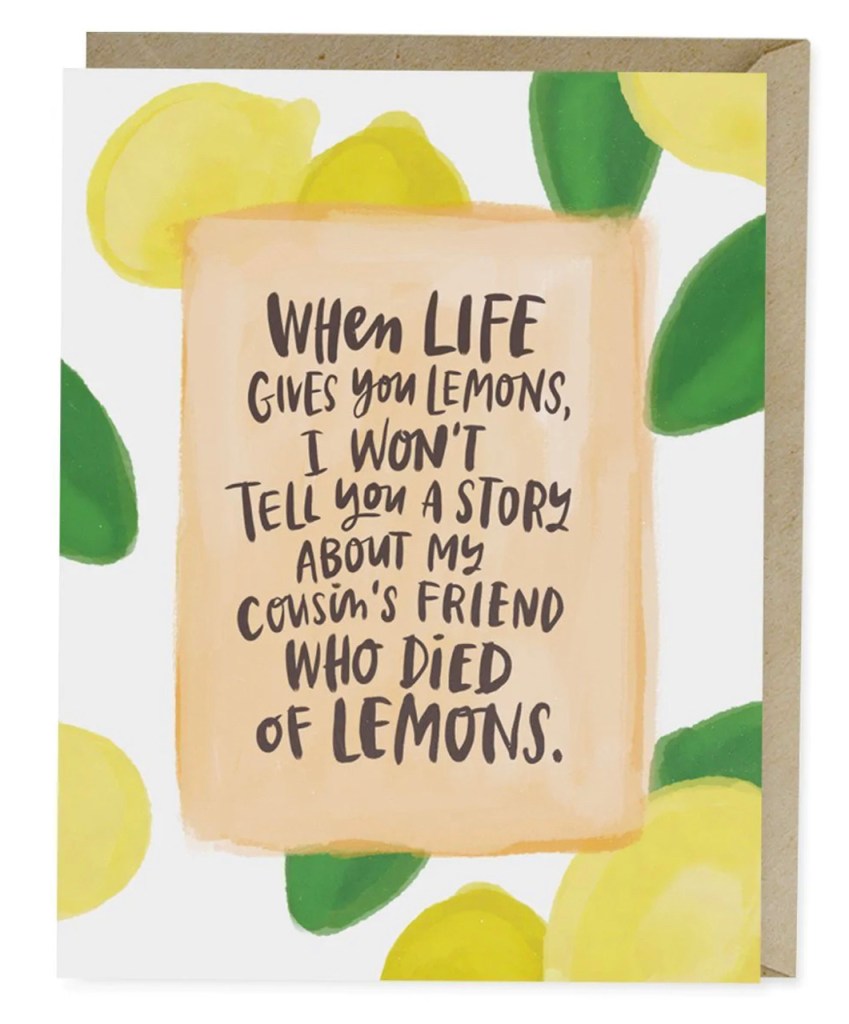
“When life gives you lemons, I won’t tell you a story about my cousin’s friend who died of lemons…” Strangely, weird cancer humor as it is, quite true quite often I now can attest.
Nearly everyone I’ve talked to about my situation has had someone in their lives who’s gone through or passed from cancer. I work in radiation oncology — a change I recently made because cancer has come through my life. Prior to my own diagnosis, I lost my father in 2019 and a sister in 2020 to cancer. (Another sister passed 5 weeks later from other illness.) Cancer is everywhere around me, as is to many others. So when people respond to me with their own stories, I know it comes from a place of empathy. Sometimes even grief. Sometimes the stories are of triumphing through it. Some will say to me that someone they know had breast cancer and they passed and neither of us will know quite what to say next. Sometimes the person they know had breast cancer and are now fine; therefore, I will be too. This isn’t always as comforting to me. Mostly because there are many different types, gradations of this disease that such a statement paints a broad stroke to one certain eventuality (I will be fine though 🙂 ), and also because it can feel like it leapfrogs over this entire journey when I am living it one (at times horrid) day at a time. But I understand the sentiment.
Yet many others offer solutions. I have come to expect that nearly everyone will give me advice. In the beginning it was more overwhelming to have to say “not right now”, but now, weeks into this I’ve learned to appreciate that it’s all a gesture of love and support. I don’t always have to heed them, but I’ll be grateful for the spirit in which the advice is given…unless the advice is downright quackery then I may well say something unwieldy (no I will not be using essential oils for any ostensibly curative value, so please don’t rope me into any MLMs, and, no, I do not share your distrust of the medical field).
 Journal of odd days (even ones too)