
This is not one of my cancer posts But it is a cancer post… It is a revisit of an article I wrote in 2016.
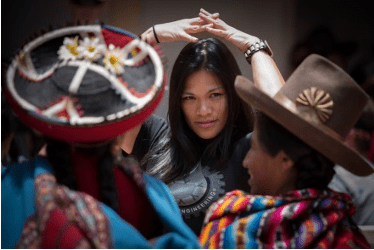
Nearly ten years ago, I spent three weeks volunteering at CerviCusco Clinic in Peru. I was part of a service team sponsored by my employer at the time, BD, whose goal was to help strengthen the clinic’s capacity and long-term sustainability. CerviCusco is dedicated to improving the health and quality of life of women throughout the Cusco region, and I served as the Communications volunteer.
A decade has passed, yet many of the faces, voices, and moments from those weeks remain as vivid as if they happened yesterday. Every day there made me grateful. It also gave me resolve..
On one Friday, I had the rare privilege of observing CerviCusco President and Founder Dr. Darron Ferris perform colposcopies, biopsies, and two microsurgeries to remove precancerous cervical lesions. I don’t know that I will ever again have such an experience—watching and learning from a passionate, hardworking physician in his natural habitat.
Many of the women come to the clinic after receiving an abnormal Pap test result. They arrive frightened. Many have already been touched by cervical cancer through mothers, sisters, daughters, or friends. At the clinic, most find answers to their questions and relief from their fears.
One woman arrived convinced she had cancer. After a colposcopy examination, she heard words she never expected: “Claro!” The doctor saw no evidence of abnormal tissue on her cervix. She trembled as she cried with disbelief and joy. Through tears, she explained that she had been so frightened she had been unable to breastfeed her children. I am grateful to have witnessed the moment she realized she was going to be alright.
That weekend, we traveled to Chinchero, a town about an hour from our home base in Cusco, for an outreach clinic. In just four hours, three medical professionals performed Pap tests for approximately 250 women. I began the day interviewing women with the help of a translator, then assisted in one of the exam rooms by giving instructions and holding babies while their mothers received exams.
Here, women carry their children on their backs almost everywhere they go. The terrain is rugged, and many travel for hours to reach a clinic or workplace. At one point, a woman handed me the child she was carrying. What I assumed was a small infant turned out to be a sleeping three-year-old. He was heavy. I was left in awe of the strength of the women around me.
Many live with challenges that are difficult to imagine: poverty, domestic violence, high maternal mortality, high infant mortality, and a high incidence of cervical cancer. Yet they greet others with easy smiles. They are often shy, always generous, and remarkably resilient.
As the Communications Specialist for this volunteer service trip, I spent five emotional days interviewing women on camera. Many had experienced abnormal Pap tests; others were at different stages of diagnosis, treatment, remission, or recovery. Their stories—of losing mothers to cancer, fearing hysterectomies, or struggling to afford a clinic visit—left me speechless.
The fear in their eyes, the anguish in their tears, and the gratitude in their smiles shook me to my core. It felt both like an immense responsibility and a profound privilege to be entrusted with the weight of their pain and the strength of their resolve.
The staff of CerviCusco are heroes, but so are the women they serve. These women live, work, and raise families under difficult circumstances and in the shadow of a disease that has taken hold of this community. Yet they continued forward with remarkable courage.
Cervical cancer is not an inevitable disease. Vaccination can prevent many cases. Screening can detect it early. Treatment can stop it before it becomes life-threatening. Yet Peru continues to experience one of the highest rates of cervical cancer in the world, and in this region, it remains a leading cause of death among women. It has taken far too many lives.
We play only a small part in the effort to eliminate this disease. But after listening to these women, holding their children, sharing their fears, and witnessing their courage, I understand that hope is not something abstract. Hope is a woman showing up for a screening despite her fear. Hope is a mother making the long journey to a clinic. Hope is a doctor refusing to accept that preventable deaths are inevitable.
And hope is contagious.
I saw it in the tears of a woman who learned she was healthy. I saw it in the determination of the clinic staff. I saw it in the quiet strength of the women of Cusco. Their courage gives me hope. Their resilience gives me resolve. And because of them, I believe a different future is possible.
—o0o—
When I volunteered at CerviCusco, I understood these moments through observation and empathy. Years later, after completing my own journey with breast cancer, I find myself returning to some of those memories with a different perspective. I now better understand the fear that can accompany an abnormal test result, the uncertainty of waiting for answers, and the immense relief that comes with good news. The women I met in Cusco did not know it, but they gave me a glimpse into experiences I would one day come to understand more personally.
The women of Cusco showed me that hope is showing up despite fear. Hope is making a difficult journey for a screening. Hope is trusting that answers are better than uncertainty and that early detection can save lives.
Nearly ten years later, I remain grateful for the privilege of having met them. Their stories continue to stay with me—not only because of what they revealed about the challenges women face, but because they remind me of something universal: behind every test result, every diagnosis, and every recovery is a person searching for hope.
It is a lesson I have never forgotten, and one that draws me back to CerviCusco even today.
 Journal of odd days (even ones too)